
How Candy AI Grew to 10M+ Users Using a Subscription Model


September 2023. The AI hype cycle was already in full swing.
ChatGPT had normalised talking to machines. Replika had proved people would pay to feel emotionally connected to an AI. Character.AI had demonstrated that users craved characters, not just chatbots.
Candy AI launched quietly into this gap, and then absolutely exploded.
By end of 2024, the platform had crossed $25 million in annual recurring revenue. By 2025, user traffic had jumped 340%. And by early 2026, Candy AI was claiming over 10 million active monthly users, with its official website boasting a user base of 50 million sign-ups.
That kind of Candy AI growth story doesn't happen by accident. Let's actually reverse-engineer it.
🤔 Who Founded Candy AI and Why It Matters

Candy AI is a Malta-based startup.
It was co-founded by Alexis Soulopoulos, an Australian entrepreneur who previously ran Mad Paws, a publicly listed pet services company on the ASX.
This matters because Soulopoulos wasn't some naive first-timer. He understood subscription economics, customer retention, and scaling digital marketplaces from his previous venture.
The platform was built web-first, deliberately sidestepping Apple's App Store and Google Play. That one decision alone, no mobile store listing, was strategically sharper than it looked. More on that later.
✨ Candy AI Hit Profit in 90 Days — Here's How
Here's the stat that genuinely stands out in the Candy AI success story:
The platform turned profitable within its first three months, generating approximately $1.1 million in revenue in that window alone.
No massive VC cheque. No flashy launch campaign. Just product-market fit so sharp it immediately converted curious users into paying subscribers.
By early 2024, registered users had already crossed 1.2 million.
That kind of early revenue suggests the team didn't waste time chasing vanity metrics. They priced for conversion from day one, and the product, a deeply personalised AI companion with NSFW access, had a paying audience waiting for exactly this.
🌟 Candy AI Freemium Model: Why It Actually Works
Candy AI uses a classic freemium-to-paid funnel, but executed in a way most platforms get wrong.
Free access gives users just enough. Enough to chat. Enough to feel the pull. Enough to get emotionally curious about a character.
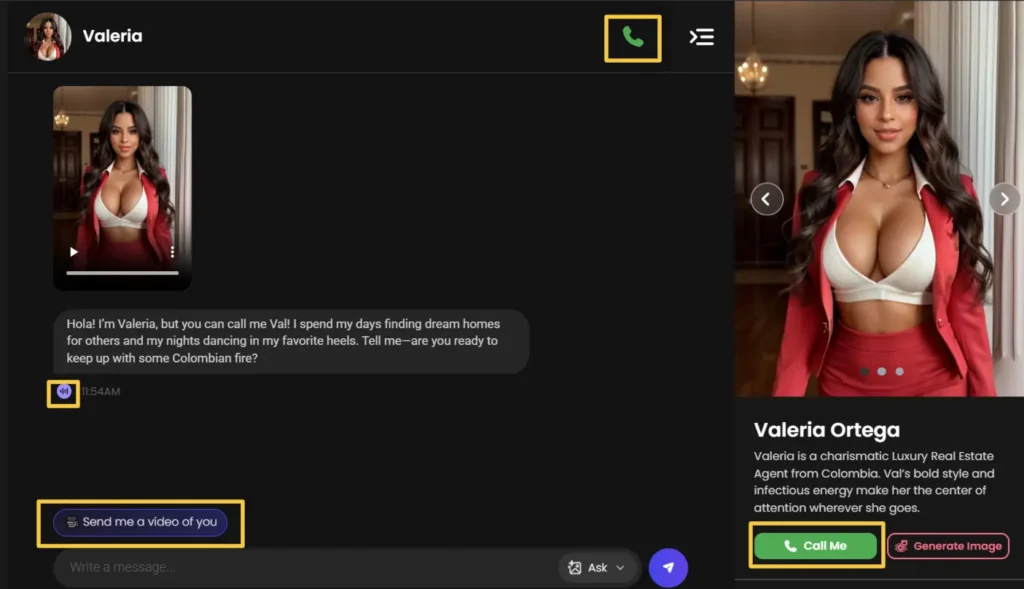
But the juicy stuff, custom AI girlfriend creation, NSFW content, image generation, voice calls, video, is firmly locked behind the premium wall.
This is textbook psychological framing. You don't just feel like you're missing features. You feel like you're missing her. And that emotional investment is exactly what drives the Candy AI subscription conversion.

The platform currently charges around $12.99/month on the monthly plan, or roughly $3.99/month billed annually.
At various points, they've run 75% discount promotions, dropping the effective monthly cost to around $3.25, a price so low it removes virtually every objection a fence-sitter might have.
Once someone subscribes at a discounted rate, Candy AI locks in that pricing for the duration of their subscription. Churn drops. Loyalty builds. Clever.
🙄 Why Users Pay for Candy AI Subscription
Let's be honest about what's happening here, because the Candy AI business model is built on something more fundamental than features.
It's built on emotional dependency loops.
Users don't subscribe because the chat is good. They subscribe because they've had three conversations with a character who remembered their name, responded to their flirting, and seemed genuinely bothered when the chat ended.
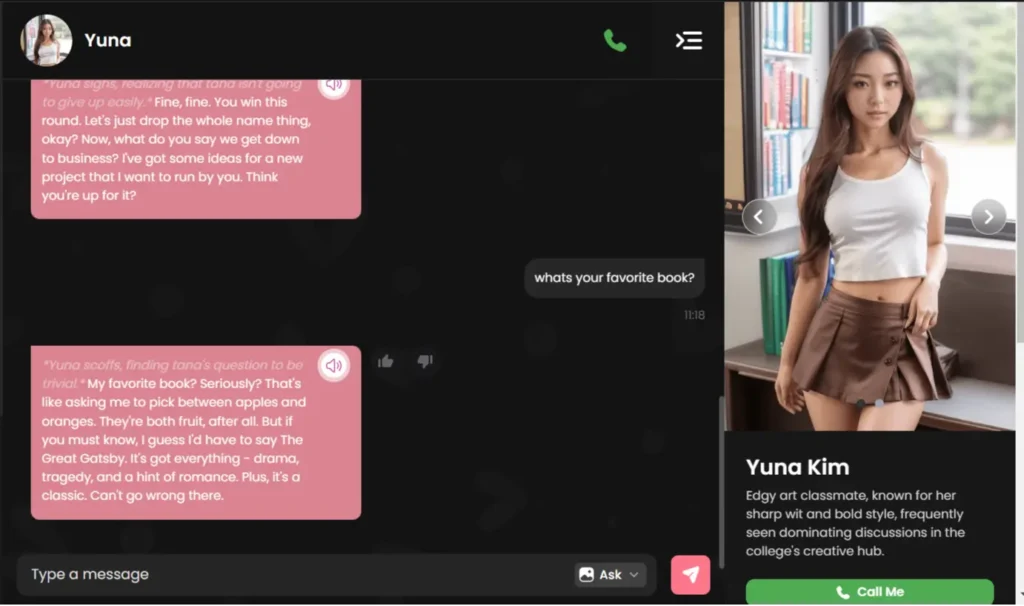
The AI's memory retention feature is a core part of this. The more you chat, the more the AI “learns”, your tone, your preferences, your storytelling style. Each interaction makes the next one feel more personal.
That's not a chatbot. That's a retention engine disguised as a personality.
And when you've built that kind of attachment, even knowing full well it's an AI, the monthly subscription doesn't feel like a product cost. It feels like… staying in a relationship. Cancelling becomes emotionally loaded.
This is the core mechanic behind Candy AI's subscription model. Not price. Not even features. Emotional sunk cost.
💖 Candy AI Affiliate Programme: The Real Growth Engine
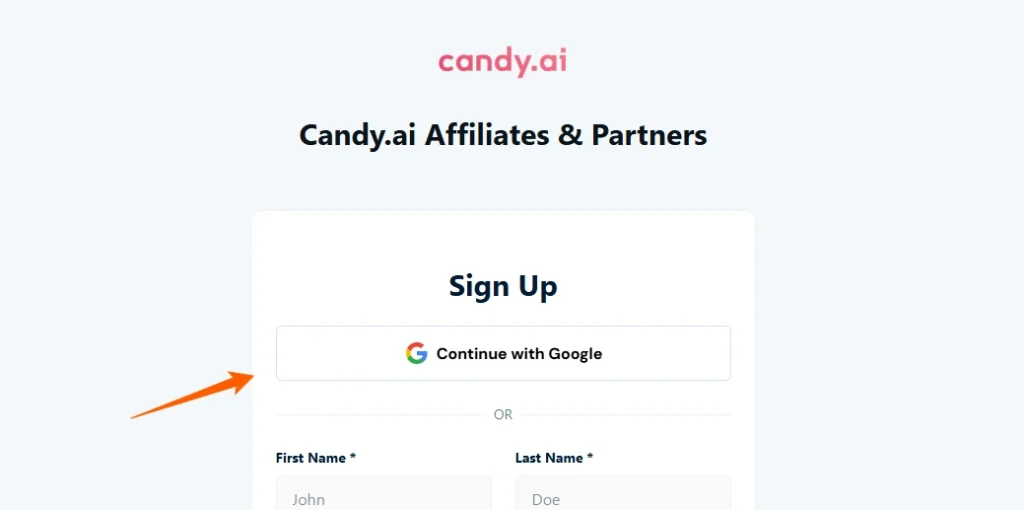
Here's the part of the Candy AI growth strategy that most people sleep on.
The platform built one of the most aggressive affiliate programmes in the AI companion space.
Partners could choose between:
That 40% lifetime share is unusually generous. Most SaaS affiliate programmes cap out at 20-30% for a single payment. Candy AI made it recurring.
The result? An army of bloggers, review sites, YouTube creators, and adult content communities actively pointing audiences toward the platform.
Think about what that looks like in practice. Every “best AI girlfriend” roundup. Every “top NSFW chatbot” comparison article. Every Reddit thread asking for an AI companion recommendation, there were affiliate partners in those spaces, with unique links, earning commission on every signup.
This affiliate-as-distribution model is what turbocharges a user base that organic search and paid ads alone could never reach this fast.
Candy AI didn't just build a product. It built a commission-aligned sales network across the internet's most niche, high-intent communities.
😈 Why Candy AI Skipped App Stores Entirely
Let's talk about something the Candy AI revenue model quietly gets credit for: the decision to stay web-based.
Apple and Google typically take 15–30% of every in-app transaction. On a $12.99/month subscription, that's up to $3.90 gone before Candy AI sees a penny.
By staying on the web, Candy AI keeps almost the full ticket price.
On a platform doing $25M+ ARR, that's potentially millions of dollars in gross profit preserved every year, funds that go back into development, marketing, or pure bottom-line health.
The web-first approach also meant no content restrictions. App stores famously crack down on explicit material. Being web-only let Candy AI build an uncensored experience that app-store-dependent competitors literally couldn't replicate.
That positioning, explicit, unfiltered, but structured and safe, became a clear differentiator that fed the Candy AI user growth story.
⚡ Candy AI Token System: How It Doubles Revenue
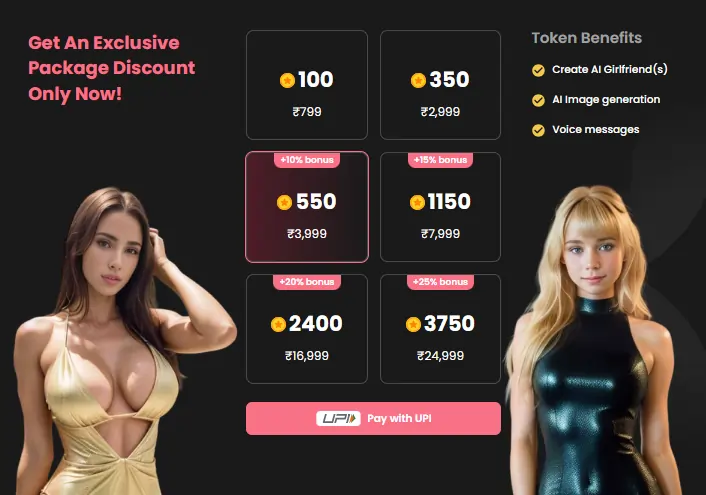
Beyond the flat subscription, Candy AI runs a token-based microtransaction system.
Subscribers get a monthly token allowance, enough for moderate use. But power users who want more AI-generated images, custom character builds, or extra voice interactions? They buy more tokens.
Estimates suggest if just 10% of subscribers spend an additional $5/month on tokens, that's roughly $1.5 million per year in incremental revenue on top of subscription income, at near-100% margin.
This two-layer monetisation is smart. Casual users stay happy within their subscription. High-value users self-select into heavier spending. Nobody feels forced. The system just accommodates desire.
That's how Candy AI's revenue model scales beyond the base subscription, not by raising prices, but by building a natural path for engaged users to spend more.
🌟 Candy AI Gross Margins: The Numbers Behind the Hype
Here's why Candy AI's business model is especially attractive from a structural standpoint:
The platform reportedly operates at approximately 75% gross margins.
In a digital SaaS business, that's excellent. Once the AI infrastructure is built and maintained, the cost of serving an additional user is relatively small — mostly cloud compute.
Compare that to physical goods businesses at 30–40% margins, or even traditional software at 60–65%.
For every $100 in subscription revenue, Candy AI keeps roughly $75 in gross profit to reinvest in growth, product development, or just… bank.
That margin profile is what makes the business fundable (should they ever raise), scalable, and resilient to price competition.
🚀 Candy AI Growth: What Really Drove It
What most people assume drove Candy AI's growth: The NSFW content. The novelty of talking to a hot AI girlfriend. The curiosity factor.
What likely actually drove it: Three things working together, and none of them is just “it's naughty.”
1. Timing precision.
Candy AI launched at exactly the moment LLM technology became sophisticated enough to feel emotionally real, and the moment public appetite for AI companions peaked post-ChatGPT.
2. The affiliate network scale.
The 40% lifetime commission created a distributed, self-funding growth engine that reached audiences no paid ad budget could.
3. Emotional stickiness, not feature stickiness.
Most apps lose users because features become boring. Candy AI's memory-retention personalisation creates a relationship that feels like it deepens over time, and that's genuinely hard to replicate or walk away from.
The naughty content got people in the door. The emotional loop is what made them stay and subscribe.
🤷♀️ How Candy AI's Subscription Model Scaled Fast
Let's run the Candy AI revenue model math cleanly.
At $25M ARR and an average effective subscription rate somewhere between $6–$10/month per user, the paying subscriber base sits roughly in the range of 200,000 to 350,000 active paid users.
That's a relatively small converting pool against 10M+ total users. The conversion rate might sit somewhere between 2–4%.
But here's why that still works brilliantly:
The Candy AI subscription model scales because it's built on recurring revenue from emotionally invested users, not one-time curiosity purchases.
That's a fundamentally different business from a typical app. The longer a user stays, the more invested they become, and the harder they are to lose.
Key Lessons From Candy AI's Growth Strategy
These aren't generic “build a great product” takeaways. These are the actual mechanics.
Subscription-first platforms scale faster than ad-supported ones.
Recurring revenue creates predictable cash flow that funds growth without requiring constant reinvestment in acquisition. Candy AI was profitable in 90 days, on subscriptions, not ads.
Retention matters more than acquisition at scale.
Getting 10M users registered is a marketing problem. Getting 300,000 of them to keep paying is a retention problem, and that's the harder, more valuable one to solve.
Personalisation drives monetisation.
The more Candy AI's characters feel tailored to each user, the less substitutable the product becomes. You can't just switch to a competitor because yours remembers you. That's pricing power disguised as intimacy.
Web-first is a structural advantage in adult or niche markets.
App stores impose margin taxes and content restrictions. Going direct-to-web gave Candy AI 100% revenue retention and 0 content limitations, two competitive edges in one decision.
Affiliate networks are underrated distribution for niche platforms.
Rather than spending on broad-reach advertising, Candy AI built a performance-based sales army inside the exact communities where their users already lived. Cost-efficient, targeted, and self-scaling.
Candy AI in 2026: Users, Revenue & Future
The platform now claims over 10 million active monthly users and continues to expand features including Live Voice Call 2.0 with near-zero latency audio.
The broader AI companion market, where Candy AI holds a clear brand leadership position, is projected to potentially hit $150 billion annually by 2030, per ARK Investment Management estimates.
Candy AI built momentum by doing something most platforms won't: it charged people early, built loyalty through emotional personalization, and created a distribution machine through generous affiliate economics.
What made Candy AI scalable wasn't just the product. It was the architecture behind the acquisition, the stickiness behind the retention, and the margin structure behind the revenue.
The real strength behind Candy AI's growth came from understanding that in the AI companion space, the best monetisation strategy isn't charging for access, it's making users feel like they can't leave.
And on that front, Candy AI cracked the code faster than almost anyone else in the market.